0800 699 353

 Parts Finder


Table of Contents
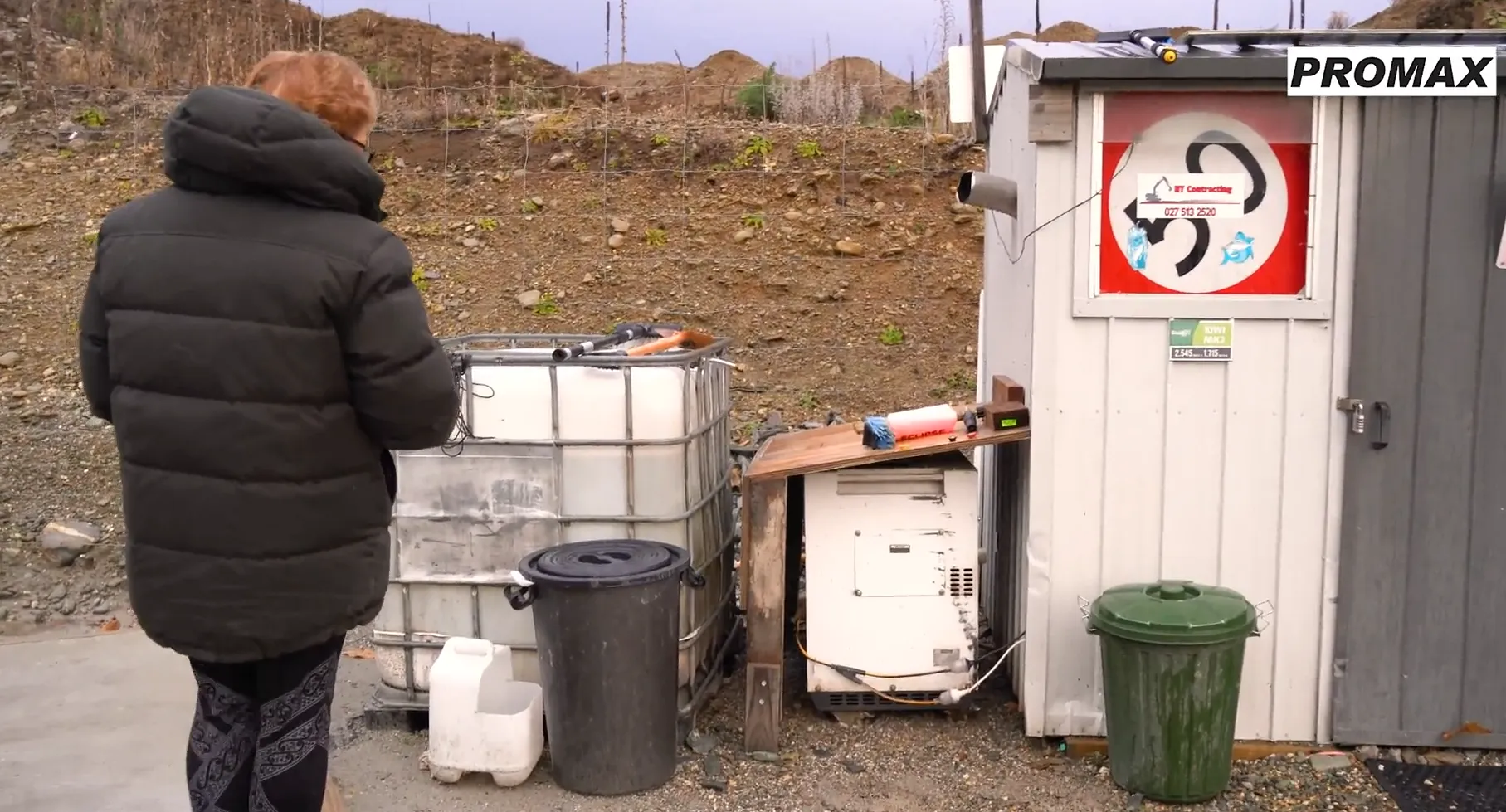
In this article: how a New Zealand contractor runs a wash bay on a Promax D8600SE diesel generator, what the specs say about outlets, noise and running time, and when a different generator is the smarter buy. A 7.9kVA single-phase diesel generator can run a contractor's wash bay and yard power through a full working day, as long as your steady load stays under its continuous rating. The kVA figure on the box is the peak, not the number to use for sizing.
This guide starts with one contractor's experience, then covers running costs and where this type of generator is the wrong tool. It suits contractors, farmers and workshop owners who need yard power without a three-phase supply. If your loads are small and occasional, a petrol unit may cost less. Proline Industrial sells the generator discussed here, so treat the comments as one business's experience rather than independent testing.
Meet HT Contracting
HT Contracting started small about 11 years ago. The owner bought a digger, and the business grew from there. The crew is working on a subdivision at the moment, and also takes on smaller jobs such as house pads and driveways. Trucks and gear working on that kind of job need regular cleaning, and that is where the generator comes in. The owner shares his experience in a customer video linked at the end.
The Promax D8600SE at a glance
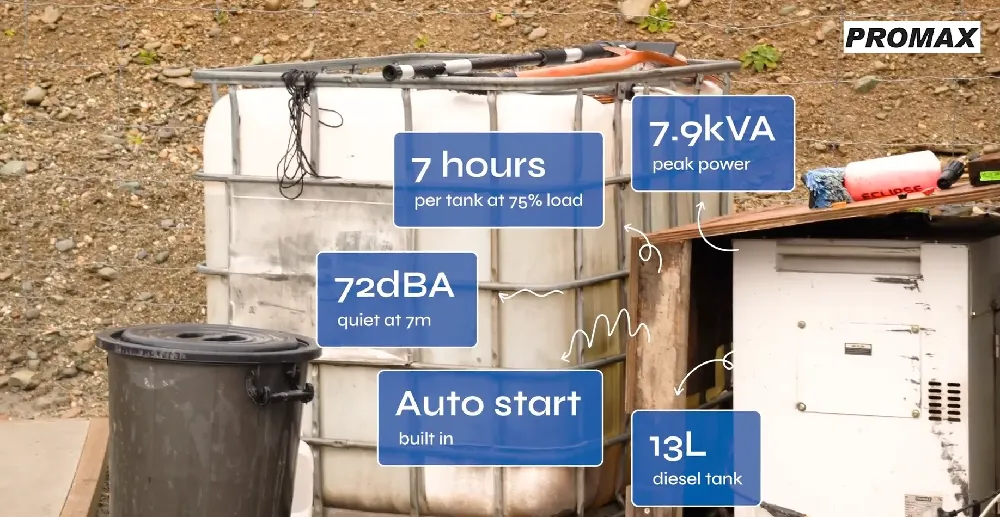
Promax D8600SE 6300W/7.9kVA Diesel Generator: An enclosed, air-cooled, single-phase diesel with electric start, it puts out 6300W at peak and 5.5kW continuously. Two 230V sockets (one 32A, one 16A) sit on the panel, and the 13L tank gives about 7 hours at 75% load. Noise is listed at 72dBA measured at 7 metres. It weighs 154.5kg, and the warranty is 12 months.
It also has a built-in wireless remote start/stop and a 2-wire auto start/stop system, which we position for house solar backup.
- Best for: yard or site power on single-phase, long days where diesel economy matters, and crews who want to start the unit from a distance.
- Not for: three-phase equipment, 400V loads, or anything that needs more than 5.5kW running for hours.
How HT Contracting uses it: four use cases
The owner's account covers four jobs, from the most common daily task to the more occasional, each ending with a note on what to check before you copy the setup.
Use case 1: Powering a wash bay for trucks and gear
Trucks and gear need to be washed down, and the wash pad needs reliable power to do so. HT Contracting bought the generator about three years ago to run the wash pad and the office. The owner describes the 7.9kVA unit as the one that powers all the gear washing, and four people use it all the time. The account doesn't cover the wash equipment's power draw, so add up your own water blaster and pump ratings before you size anything. Electric water blasters, especially larger single-phase induction motors, draw a heavy start-up surge, which is why the 6300W/7.9kVA peak rating matters alongside the 5.5kW continuous limit. Our water blaster range lists the models.
A wash bay is a fair test because the load is steady and the whole crew relies on it. It also happens every working day, which raises the next question: how does the generator cope with long hours?
Use case 2: Running a full working day, 6:30 to 6:30
At the previous yard, one generator carried both the wash bay and the office. It ran from about 6:30 in the morning to 6:30 at night, Monday to Friday, totalling 12 hours a day. The D8600SE's 13L tank is rated for about 7 hours at 75% load, so a 12-hour day means refuelling, a lighter load, or both. The owner did not specify which one applies, so ask our team how it would work for your loads.
Long hours are one thing; getting it going each morning is another, and that is where the remote start earns its place.
Use case 3: Starting it by remote control
With four people relying on the generator, nobody wants to walk to it every time. The crew starts it with the remote control, and the D8600SE comes with built-in wireless remote start/stop. We don't have a rated remote range listed, so check it against your site layout before you plan around it. Equipment doesn't always stay where you first put it, though, as HT Contracting found when it changed yards.
Use case 4: Moving the setup when the yard changes
The business moved yards in February, and the generator went with it. It now sits at the end of the new yard and is used purely for the wash bay, rather than also running the office. At 154.5kg, with no wheel kit listed, you will need lifting gear to shift it, so think about where it will live before you commit. Asked about the machine overall, the owner was measured: it was going to do the job, "but the service that we had was really good."
Taken together, the four jobs show a generator doing one steady, unglamorous task day after day, which is what most yard owners actually need.
Running costs and warranty
Running costs come down to fuel, servicing and warranty, and the D8600SE's specs give you a starting point for each.
| Item | Detail |
| Tank | 13L, about 7 hours at 75% load |
| Fuel use | About 1.9L an hour at 75% load, worked out from 13L over 7 hours |
| Warranty | 12 months; confirm terms at purchase |
Fuel cost depends on your load, so treat that figure as a starting point. A generator that runs 12 hours a day accumulates hours quickly, so weigh servicing and warranty terms, too.
Limitations: who this generator is not for
Every machine has edges, and a fair guide says where they are. These are worth knowing before you spend money.
- Single phase only. It has two 230V sockets and no 400V outlet, so three-phase gear will not run on it.
- Peak versus continuous. The 7.9kVA figure is the maximum. Plan around 5.5kW for steady running.
- Not silent. 72dBA at 7 metres is quiet for a diesel of this size, but still a working engine.
- Heavy. At 154.5kg with no wheel kit listed, it is not a grab-and-go unit.
- Limited feedback. These results are from one customer, and we don't have any other customer reviews of the D8600SE yet.
- Bigger or smaller jobs. For larger loads, browse our conventional generators; for occasional light use, a petrol unit may be enough.
How to decide
This table sets the customer's experience beside the checks to make on your own site.
If your work is mostly... | What to check on the D8600SE | Verdict |
| Washing trucks and gear | Running and starting watts of your wash gear against 5.5kW continuous and 7.9kVA peak | Good fit |
| Crew starting it themselves | Remote range against your site layout | Good fit |
| Long yard days | Fuel plan: 13L is about 7 hours at 75% load | Needs planning |
| A yard that may move | Lifting gear for 154.5kg | Needs planning |
| Three-phase or 400V equipment | Not available: two 230V sockets only | Look elsewhere |
| Occasional light tools | Whether you need diesel at all | Look elsewhere |
Safety still applies. WorkSafe NZ says to use a safety switch (RCD) where equipment is outside or in a damp place, which a wash bay usually is. Our guide to safe generator operation covers more. To talk it through, call 0800 699 353, use Click & Collect from Nelson or Auckland, or try the spare parts finder.