0800 699 353
 Parts Finder


Table of Contents
The full cost of the petrol generator has never been just the sticker price. Battery technology has now caught up and the trade is starting to notice.
The cost nobody puts on the invoice.
You know what the generator costs. What nobody has ever added up for you is everything that comes after.
The fuel ran out on a Monday morning because someone forgot to fill up on Friday. The noise complaint from a residential neighbour at 7 am puts the job on hold before it has started. The conversation with the building manager when you need to run the generator inside a basement, a plant room, or a floor that is already occupied. The servicing that falls due at the worst possible moment. The risk of the thing being lifted off an unattended site is that everyone within a kilometre knows exactly where you have left it.
None of those costs appears on a purchase invoice. All of them show up in your time, your reputation, and your margins.
Battery-powered site power not only reduces those costs; it eliminates them. It eliminates most of them entirely.
What changed, and why battery power is ready now
The case for battery site power has been building for years. What stopped it from replacing the petrol generator was peak power. A welder striking an arc, a core drill biting into a concrete slab, a pump starting under load, all draw a surge that overwhelms sources not built for it. Any unit that trips on peak demand is useless for trade work, regardless of its continuous rating. Battery-powered generators are commonly known as portable power stations.
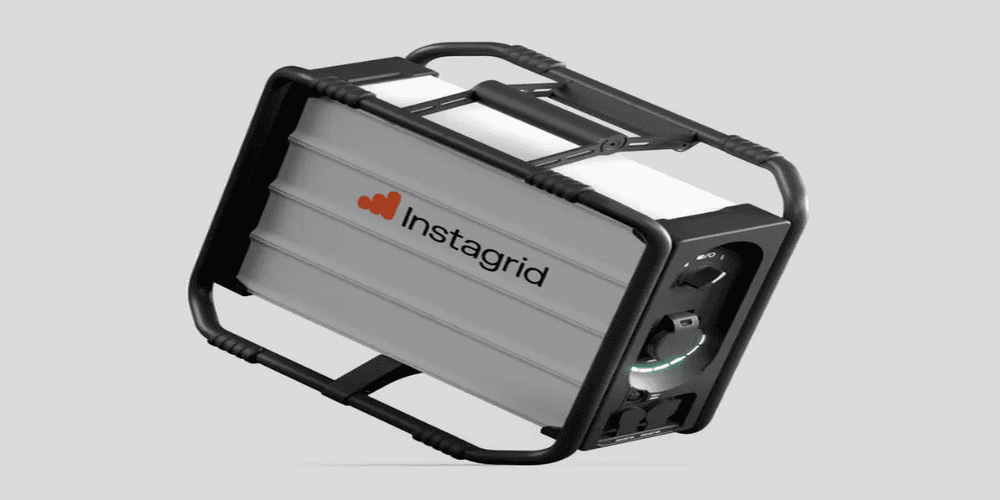
That barrier is gone. The Instagrid One delivers 230V/16A continuous output with 18,000W of peak capacity and weighs 20kg. The Instagrid Link delivers true 400V three-phase output for industrial loads that previously required a diesel three-phase set. These units are designed to perform reliably and effectively in demanding site conditions, ensuring a consistent power supply even in tough environments.
Neither is a prototype nor a first-generation product. Combined, they have been running on over 50,000 sites across Europe, in mining operations, construction, infrastructure maintenance, and hire fleets for several years. They are now available in New Zealand through Proline Industrial. Generator power can often be inconsistent, resulting in 'dirty' power that can severely damage sensitive electronic components. To minimise risk to sensitive equipment, select generators with a Total Harmonic Distortion (THD) of less than 6%.
Proper generator storage is essential, particularly in environments prone to dust, moisture, or extreme temperatures, as these factors can affect its performance.
What battery-powered site power does for reliable power
The Instagrid One delivers 230V single-phase at up to 16A continuous, with a peak power output of 18,000W (18 kW). That peak figure is the one that matters for trade use. Your welder, pump, core drill, mixer, and site saw all draw a surge on startup. A source that cannot handle the surge trips out. Instagrid One handles it.
The 2.1 kWh battery delivers meaningful runtime in real-world applications, and its 2.1 kWh capacity ensures sufficient energy for demanding tasks. The Instagrid One's versatility makes it suitable for a wide range of trade tasks, easily adapting to different equipment and job-site requirements.
Below is a table showing the range of applications and outputs possible with the Instagrid One, based on figures from production job sites, not laboratory conditions:
Application | Output per full charge |
PE pipe welding | 26 welds on 110mm pipe |
Submersible pump (2 inch) | Up to 16 hours of continuous run time |
Core drilling | 32 holes at 150 x 150mm |
Cast iron pipe cutting | 38 cuts on 110mm pipe |
Arc welding | 89 electrodes at 2.5mm |
Concrete mixer (600W) | 11.5 tonnes mixed |
Table saw | 4,100 cuts on 50 x 100mm timber |
Applications by trade for powered sites
Welding
Welders are the hardest sell on battery site power, and for good reason. Arc strike is a severe surge event, and a source that cannot handle it is worse than useless mid-weld. Instagrid One’s 18,000W peak (approximately 18 kW) is the specification that changes that. It runs 89 arc weld electrodes at 2.5mm per charge and 26 welds on 110mm PE pipe, supporting demanding welding operations where stable power is critical. The integrated transformer delivers clean, stable power to inverter welders, ensuring optimal welding performance.
Beyond the run-time numbers, the access benefit is significant. No fumes means you can weld inside buildings, in basements, and in enclosed spaces without a ventilation requirement or a health and safety assessment for exhaust in a confined area. Battery-powered generators emit no carbon monoxide, making them safe to use indoors during blackouts. No noise means residential sites and buildings with strict quiet hours are no longer a scheduling constraint.
When setting up for welding or other equipment, always use a heavy-duty extension lead and plug your tools or welder directly into the generator to ensure safety and compliance.
Core drilling and concrete cutting
Core drilling and concrete cutting are often done indoors more than almost any other high-draw trade task, including penetrations, drainage connections, and pipe sleeves through slabs and walls. Running a petrol generator in those environments creates a fume compliance problem that is difficult to manage and easy to get wrong.
Instagrid One removes the problem entirely. Zero emissions means any building, any floor, any access level. Thirty-two holes at 150 x 150mm per charge cover the scope of most drilling jobs without a recharge.
Pumping
A 2-inch submersible pump runs for up to 16 hours on a single charge of the Instagrid One. For pump and pipe crews doing dewatering, drainage work, or pressure testing, that covers most of a working day without intervention. No fuel logistics, no risk of a generator running dry overnight, no fumes accumulating in the pit or the trench.
Mixing and sawing
A 600W concrete mixer works through 11.5 tonnes of mix per charge. A table saw delivers 4,100 cuts on 50 x 100mm timber. These are production figures from sites where the units are being used for exactly these tasks, not optimistic estimates from a spec sheet.
For any job site application rated at 230V/16A, Instagrid One is a direct replacement for a petrol generator with zero fuel, zero fumes, and no engine noise. It is suitable for a wide range of power tools and equipment commonly used on construction and industrial sites. Suppose you need to run multiple devices with a combined load approaching the generator’s maximum kW output; planning for total demand ensures stable operation and equipment safety.
When three-phase matters
Some industrial loads require 400V three-phase input. Variable-speed drives, larger compressors, industrial welding rigs, and certain pump configurations cannot run from single-phase power at any voltage. These applications represent a wide range of industrial uses, including construction, agriculture, industrial operations, and commercial buildings, where reliable power is critical. Historically, that meant a diesel three-phase set—heavy, noisy, fuel-dependent, and time-consuming to move between locations on a multi-site project. Diesel generators are widely used in these sectors across New Zealand, and in rural or off-grid regions, they provide a vital source of 24/7 electricity for farmers, contractors, and remote workers. During power outages caused by storms or natural disasters, diesel generators are essential for maintaining operations in hospitals, data centres, and emergency services.
Instagrid Link delivers true 400V three-phase output from a portable battery system, offering versatility for a range of industrial applications. Multiple Link units connect to scale capacity for larger jobs. Silent. No fumes. Faster to set up than a diesel set. These battery-powered generators are designed to perform reliably even in tough industrial environments. If your application requires a three-phase, Instagrid Link is the answer. Enquire via Proline and a sales rep will confirm the right configuration for your equipment.
Cost of ownership over 12 months
Operator data from Instagrid’s European customer base shows savings of $3,000 or more per unit per year compared with running a petrol generator. The comparison breaks down across several cost areas:
Cost area | Petrol generator | Battery unit |
| Fuel | Regular spend, price volatile | None |
| Servicing | Oil, plugs, filter, carburettor | No consumables |
| Noise fines | Possible on residential sites | Silent operation |
| Indoor access | Restricted by fumes and noise | Unrestricted |
| Theft risk | High resale value | Lower profile unit |
| Weight | Typically 60–100kg | 20kg, one-hand lift |
| Fuel logistics | Ongoing cans, accounts, stops | Charge from any 230V outlet |
The capital cost of Instagrid One is higher than that of a basic petrol generator. The total cost of ownership over three to five years for a unit that is consistently worked hard favours the battery unit, particularly for operators working in environments where noise, fumes, or indoor access restrictions create ongoing compliance costs. Regular maintenance is critical to the longevity and reliability of any generator, as routine checks and servicing can prevent many common problems. When comparing battery powered generator nz options, it's also valuable to check reviews on websites and YouTube to assess performance, reliability, and real user experiences before making a purchase decision.
Power Solution Maintenance and Safety
Regular maintenance is essential for any power solution, whether you rely on a diesel generator for construction, emergency backup, or off-grid power supply in remote locations like the South Island. Keeping your generator in top condition ensures stable power output and reliable operation, which is crucial when powering sensitive electronics or essential equipment on site.
Routine checks should include monitoring oil levels, inspecting fuel and air filters, and ensuring the battery and electrical connections are secure. These steps help prevent common issues such as overheating, overload, and electrical shocks, all of which can compromise safety and disrupt your power supply. It’s also important to examine the exhaust system, maintain proper ventilation, and keep the area around your generator clear of debris to reduce fire risk and enhance performance.
Following the manufacturer’s maintenance guidelines and using genuine parts will extend your generator's life and maintain its efficiency. In remote or off-grid areas, where access to service facilities is limited, prioritising regular maintenance is even more crucial to minimise downtime and ensure continuous power.
Investing in a high-quality generator equipped with advanced features like automatic voltage regulation (AVR) and remote start can further enhance safety and reliability. These features help deliver a stable voltage, protecting sensitive electronics and providing peace of mind whether you’re on a busy construction site or powering a remote facility. Ultimately, proactive maintenance and the right equipment are key to ensuring your power solution remains reliable, efficient, and safe.
Reliable Power for Critical Systems
For critical systems—such as emergency home backup, hospitals, and data centres reliable power is not just a convenience; it’s essential. Any interruption can lead to data loss, equipment damage, or even risk lives. Diesel generators have long been the backbone of emergency backup power, providing stable, efficient power to support vital operations.
Modern diesel generators often incorporate advanced inverter technology, which delivers high-quality power with low harmonic distortion and high efficiency. This makes them ideal for running sensitive electronics and essential equipment that require a stable voltage and frequency. In off-grid or remote locations, where mains power is unavailable or unreliable, both diesel generators and battery-powered systems can provide the dependable power needed to keep critical systems running.
When selecting a power solution for these applications, it’s important to consider the required power output, efficiency, and overall reliability. The specific needs of your equipment and the expected load should guide your choice. Consulting with professionals and reviewing different options can help ensure you select a system that meets the highest standards for reliability and performance.
Whether you’re safeguarding a hospital’s life-support systems, ensuring data centre uptime, or providing emergency home backup, investing in a reliable power solution with advanced features is crucial. With the right setup, you can be confident that your critical systems will remain powered, no matter the circumstances.
Sustainable Energy for the Future
As the demand for cleaner, more sustainable energy grows, New Zealand is uniquely positioned to lead the way with its abundant wind, solar, and geothermal resources. Reducing emissions and reliance on fossil fuels is not only good for the environment but also essential for the long-term affordability and reliability of power.
For off-grid living, camping, or remote job sites, portable and battery-powered solutions are becoming increasingly popular. Solar-powered generators and compact battery systems offer reliable, efficient power output without the noise or emissions of traditional generators. These solutions are ideal for powering lights, fridges, and other essential equipment at a powered campsite or rural location, making them a smart choice for both professionals and outdoor enthusiasts.
Investing in energy-efficient appliances such as LED lights and low-consumption refrigerators can further reduce your power needs and extend the life of your battery or solar setup. When exploring sustainable energy options, it’s important to weigh factors such as cost, efficiency, and reliability, along with the specific requirements of your application.
Consulting with professionals and staying informed about the latest advancements in sustainable energy will help you choose the most effective and environmentally friendly solution. By embracing sustainable power, you not only enhance your own energy independence but also contribute to a cleaner, greener future for New Zealand.
Where off-grid battery site power is being used now
The hire industry in Europe was one of the earliest adopters, and for a straightforward reason: hire companies run their assets hard and cannot tolerate downtime from servicing or fuel logistics. Battery units go out on hire, come back, charge up, and go out again. No oil change, no fuel account, no generator service schedule to manage across a large fleet.
Maintenance contractors working in live buildings, hospitals, commercial premises, and public buildings have adopted battery-powered equipment because it is the only way to work in those environments without fumes or noise. You cannot run a petrol generator in a hospital corridor or on an occupied office floor. You can run Instagrid One.
In mining, particularly underground operations, the use of petrol exhaust in confined workings is prohibited. Battery site power is not a preference in those environments; it is the only compliant option. Instagrid has been supplying European mining operations for several years on that basis.
Infrastructure maintenance crews pump, pipe, pave, and use drainage and utilities for the portability and indoor access. A unit that weighs 20kg and fits in the back of a service van is a different proposition from a generator that needs a trailer or a second pair of hands to load.
Campgrounds across New Zealand are increasingly eco-friendly and well-equipped, providing power hookups and powered sites for motorhome travellers. These powered sites offer convenient access to electricity for appliances, heating, lighting, and extended stays, making them ideal for both comfort and sustainability. When planning your trip, booking your accommodation or camp spots in advance—especially at popular campgrounds—is highly recommended, and many travellers use dedicated apps to streamline the booking process. In remote areas or off-grid locations, having a reliable battery-powered generator nz ensures continuous electricity for safety, communication, and essential operations. When setting up at campsites or powered sites, always use proper heavy-duty extension leads to safely connect your generator and appliances. So, grab your gear and take advantage of the flexibility and spontaneity that battery-powered generators provide for your next adventure.
Instagrid One and Instagrid Link are available now through Proline Industrial with local stock. Explore the Generators category and related Proline trade tool listings to compare site power options and find compatible tools for your trade setup.