0800 699 353
 Parts Finder


Table of Contents
A GT Power battery does not usually die of old age. It dies of sitting still. Leave a standby generator in 2-wire auto start mode, and the ignition circuit stays live, quietly pulling current every hour of every day until the starter turns over slowly, then clicks, then does nothing at all. You find out at the worst possible moment, which is the middle of an outage.
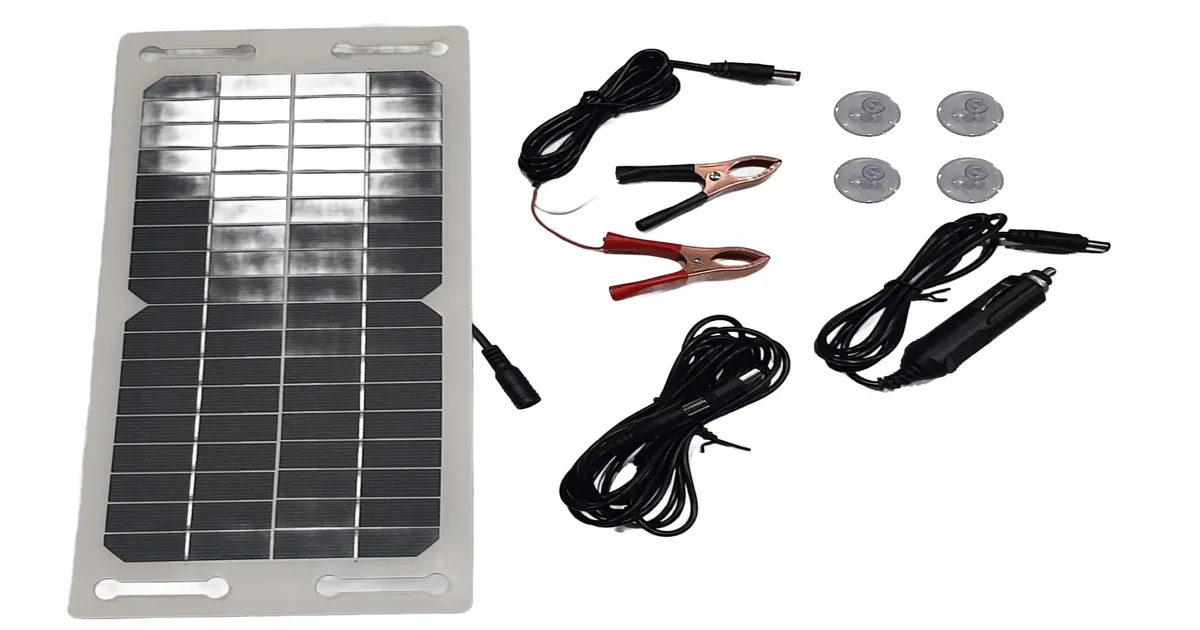
The GT Power Generator Solar Battery Charger Kit is a generator battery charger that holds a standby battery near full charge from a 25W panel, so parasitic draw and self-discharge do not flatten it between runs. This guide covers why a solar charger suits standby machines better than a mains one, the kit's features and specifications, which generators it suits, how to place the panel for a New Zealand winter, and where solar will not rescue a battery that is already damaged.
Why do generator batteries go flat while the machine sits idle
Two things are working against a standby battery, and they never stop.
The first is parasitic draw. In 2-wire auto start mode, the ignition has to remain switched on so the machine can respond the instant the changeover signal arrives. That readiness has a cost: the control circuit draws a small current continuously, and over weeks, that small current adds up to a serious drain on a modest starting battery.
The second is self-discharge. Even a battery with nothing connected to it loses roughly 3 to 5 per cent of its charge every month at around 20 degrees C, and that rate climbs as the shed warms up. Stack the two together, and a generator that ran fine in March can be too flat to crank by June.
Lead-acid batteries do not wait patiently at a low charge either. Once the standing voltage drops below about 12.4 volts, lead sulfate begins crystallising on the plates, and below roughly 12.0 volts, those crystals harden, and recovery becomes unlikely. Sulfation is the most common cause of shortened battery life, and it is entirely preventable. The battery is not being drained by anything dramatic. It is being killed by nothing happening.
For a dairy shed that cannot lose vacuum pump power, a lifestyle block on a long rural feeder, or a hire fleet parked up over winter, the maths is unforgiving. A new battery and a callout cost far more than keeping the charge topped up.
Why choose a solar charger rather than a normal battery charger
This is the question worth answering properly, because a mains charger is cheaper and most people already own one.
The problem is location. Standby generators live where the power is not: the far end of a yard, beside a pump shed, or in a container on a remote site. A mains battery charger needs a socket within lead length, and if a live socket were available, the battery would probably not be in trouble. During an outage, it is useless anyway, because the thing it needs is the thing that has failed.
A solar generator battery charger removes that dependency. The panel makes its own power where the machine already sits and feeds a slow maintenance charge. That is the real advantage, because battery maintenance is not difficult. It is a job that gets forgotten.
| Method | What it does well | Where it falls down |
| 25W solar maintenance kit | Works unattended wherever the machine lives, including off-grid sites and during outages | Output drops in winter and under shade; it maintains a charge rather than reviving a flat battery |
| Mains smart charger | Fast bulk charging and a proper float stage; ideal in a workshop bay | Needs a live socket nearby, so no help on a remote site or mid-outage |
| Monthly exercise run | Charges the battery and circulates fuel and oil through the engine | Relies on someone remembering, and short runs may not replace what was drawn |
| Charging from a tow vehicle | Convenient for trailer-mounted units already being moved | Thin charge wiring returns very little current, and only while towing |
The honest summary: a mains battery charger is the better tool for bringing a battery back. A solar charger is a better tool for making sure it never needs to be brought back.
Features of the GT Power solar battery charger kit
The kit is easy to fit and deliberately simple. There is no controller to program and no wiring loom to build.
• 25W solar panel, sized to hold charge rather than to bulk charge a dead battery
• 3 metre 2.1x5.5mm DC extension lead, so the panel can sit in the sun while the machine sits in the shade
• Plugs straight into the dashboard socket on 2-wire auto start units, with no tools and no cutting
• Suits the GT4000ESi, GT6000ESi, GT8000ESi and GT9005Ei
• Proline SKU 40472, listed at $99 excl GST at the time of writing
Stock is held at the Nelson and Auckland warehouses, so you can select click and collect or take free shipping on online orders over $50. Check current availability on the product page before you order. At that price, the kit costs less than one replacement starting battery.
Which generators does the GT Power charger suit
The kit is built around the GT Power range and any other generator using a 2-wire auto start arrangement with a matching DC socket on the dashboard. An ATS-ready inverter set that spends its life waiting for a signal is exactly the right candidate.
Check two things before ordering. Confirm the dashboard socket accepts a 2.1x5.5mm plug, since that connection is what makes the kit plug-and-play rather than a wiring job. And if you run a GT9005Ei, that model has been superseded, so ask the customer team to confirm fitment against your replacement unit. Other parts for these machines sit in Generator Parts and Accessories, and the spare parts finder will match consumables to your serial number.
Fitting the kit and getting real output from a New Zealand winter
Installation takes about five minutes. Getting good output takes slightly more thought.
1. Plug the DC extension lead into the dashboard socket on the generator.
2. Place the panel where it sees the sun across the whole day, not just at noon.
3. Face it true north and tilt it up, roughly matching your latitude: about 37 degrees in Auckland, 41 in Nelson, 46 in Invercargill.
4. Fix it down properly. An unsecured panel becomes a sail in the first decent nor'wester.
5. Keep the glass clean. Dust, pollen and salt film all cut output, and coastal sites collect all three.
Winter changes the numbers. Short days and a low sun angle mean a panel can return well under half its summer yield in June, so leave nothing shading it: a downpipe, a stack of pallets or an overhanging branch costs more output than most people expect. Every few months, put a multimeter across the terminals with the engine off. Around 12.6-12.8 volts is healthy. Anything near 12.4 volts or below needs attention now, not later.
Carbon monoxide is odourless and kills quickly. Never run any petrol or diesel generator indoors, in a garage, under a deck or inside a container. Any permanent standby connection to a property must be installed by a registered electrician using an approved changeover switch, so power can never backfeed into the network. Our guide on using a portable generator safely during a power cut covers this in detail.
Dump trailer batteries and other equipment that sits between jobs
The same failure pattern shows up well beyond generators, which is why a dump-trailer solar charger is such a common search term. A hydraulic tipping pump draws heavy current in short bursts, and the charge wire running back through the trailer plug is far too thin to return that energy at any useful rate. The trailer then sits for a fortnight between jobs, self-discharging, until the hoist crawls halfway up a load and stalls.
Solar suits that pattern, with two caveats. A maintenance panel keeps a healthy dump trailer battery topped up between jobs, but will not recharge a flat one, and any panel wired directly to a battery needs reverse discharge protection so it does not pull current back out overnight. The GT Power kit is specified for the generator dashboard socket rather than direct battery terminals, so to protect a tipping trailer, a stock feeder or a boat battery, ask Proline about the right lead or look at the options in Battery Chargers.
When a solar charger will not save the battery
A 25W panel is a maintainer. If your battery has already sat below 12 volts for weeks, the plates are likely sulfated, and no trickle charge will undo that. Replace it, then fit the solar kit to protect the new one and get full battery life out of it. The same applies to a battery over about four or five years old, or one that drops voltage sharply the moment the starter engages, which usually points to a failing cell.
Rule out a fault first, too. A machine that flattens a healthy battery in days rather than months has more-than-normal standby draw and needs diagnosing, not covering it up with a charger.
Keeping your GT Power battery ready to start
Standby power only earns its keep if it starts the first time. A solar generator battery charger is one of the cheapest ways to make that reliable, because it removes the human step entirely. If you are still choosing a machine, the generators range at Proline Industrial covers inverter and conventional sets, and the team can confirm the right kit for your model on 0800 699 353.