0800 699 353
 Parts Finder


Table of Contents
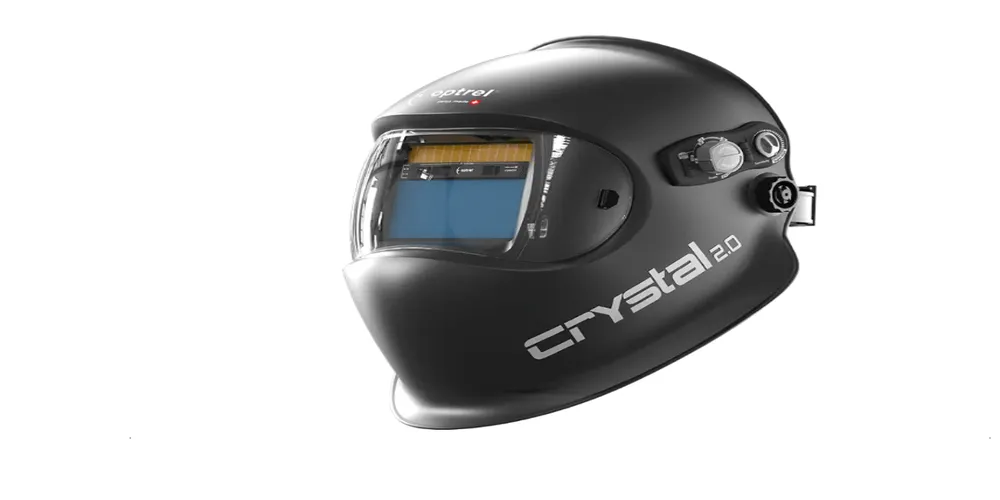
Most welders quietly accept poor visibility as part of the trade. You squint through a dark green filter, line up the joint by feel, nod the shield down, and hope the bead lands where you wanted it. After a full shift, your eyes feel gritty, your neck aches, and the rework pile keeps growing. This Swiss-made auto-darkening helmet was designed to break that cycle, putting genuine colour, realistic vision at the centre of the job. Once you have used one, the old way feels like working with the lights off.
The Optrel Crystal 2.0 is built for people who weld for a living and want to see clearly, both before the arc strikes and while the puddle forms. Below, we walk through the everyday frustrations it solves, the technology behind it, a plain-features table, and the practical checks you should make before you spend money on a new lid.
The pain points every welder knows
Poor visibility in the resting state is the big one. A standard auto darkening lens sits at shade 4 when idle, blocking roughly 95 per cent of light, so the area around you turns dim and muddy. Tacking, joint alignment and inspection all become guesswork. You lift the hood, line things up, drop it again and lose your position. Repeat that a few hundred times a day, and the wasted minutes stack up fast.
Colour distortion is the next problem. A typical green-tinted filter washes everything into shades of green and hides the subtle colour cues in the weld pool that tell you whether your heat input is right. If you cannot read the puddle, you cannot react to it, and consistency suffers.
Then there is eye strain. A filter that snaps harshly from dark back to light forces your eyes to readjust constantly, so by mid-afternoon, concentration drops and mistakes creep in. Add a poorly balanced shield that drags on your neck every time you nod, and comfort becomes a genuine productivity issue rather than a luxury. Finally, many cheaper hoods make you stop, lift the visor, and reach for safety glasses every time you grind, breaking your rhythm. None of these is dramatic on its own. Together, they slow you down, tire you out and cost you quality.
How does this helmet solve them?
Optrel's flagship answers each of those frustrations directly. Its headline feature is Crystal Lens Technology, which delivers a shade 2.0 resting state. In plain terms, that means around 31 per cent light transmission, against roughly 5 per cent on conventional models. You get a bright, almost clear view of the workpiece before striking an arc, so tacking, alignment, and checking happen with the shield down and both hands free.
True colour vision tackles the green tint. The filter passes far more of the visible spectrum, so colour looks realistic in both the resting and darkened states. With the lens light, it looks close to clear window glass, and once darkened, you still get a high contrast, detailed view of the pool with no heavy green cast. That clarity lets you read heat and travel speed at a glance, which is where consistent beads come from.
For shade control, detection runs automatically across shades 4 to 12 through a multi-sensor array with a patented sensor slide that improves detection angle. Those sensors auto-adjust the shading response to arc brightness and set the level on their own, with fine calibration to suit your eyes. Prefer to set it yourself? Manual mode offers infinite selection within the same range. The protection level is automatically adjusted by the shade level to help prevent flash exposure. A gentle opening delay, branded Twilight, then eases the lens from dark back to light rather than snapping it shut, and FadeTronic helps prevent sudden flash-blindness, which noticeably reduces fatigue over a long day.
Comfort is engineered in, too. A patented eccentric mechanism balances the weight when the shield is raised, easing neck strain during repeated nodding. The whole unit weighs around 530 grams, making it lighter than many competing helmets. Power comes from solar cells plus two replaceable CR2032 batteries, so upkeep is simple, and the replaceable battery setup remains reliable over long use, meaning you are not tied to a charging routine. A fast external grinding mode lets you move between welding and grinding without taking anything off, and a curved outer cover helps stray sparks and spatter roll off rather than burning in, which matters during overhead work.
Safety underpins all of it. The lens carries a top optical class rating of 1/1/1/2, the standard that measures clarity, light diffusion, shade consistency and how the view holds when you look through it at an angle. Full ultraviolet and infrared protection is present in every state, including before the lens has darkened, so your eyes are guarded whether the arc is lit or not.
Feature | What you get | Why it matters |
| Shade control | Fully automatic plus manual | Hands-free adjustment or full personal control |
| Optical class | 1/1/1/2 | Top-tier clarity, low distortion and even shading |
| True colour vision | Yes | Realistic colour reading of the weld pool |
| Opening delay (Twilight) | Adjustable | Gentle return to the light state, less eye strain |
| Grinding mode | External controls | Quick switching between weld and grind modes without removing the hood |
| Weight | Around 530 grams | lightweight helmet that helps reduce neck fatigue |
| Power | Solar cells plus 2 x CR2032 battery | Reliable, easy to maintain |
| Dark state range | Shade 4 to 12 | Covers light tacking through to heavy current work |
What to consider before buying any welding helmet
A helmet is a personal kit, so it pays to match it to your work rather than chasing the cheapest option. Use these points as a buying checklist.
Light state and optical clarity. This is the single biggest comfort upgrade available today. A lower resting shade, like the one on this model, means you see clearly between welds. Check the optical class too. A rating of 1/1/1/1 or 1/1/1/2 is the level to aim for, since it grades clarity, light diffusion, shade consistency and angle dependence.
Shade range and reaction speed. Ensure the dark-state range covers your processes. Shade 4 to 12 suits most TIG, MIG and stick work. Fast sensor response and reliable arc detection protect your eyes, so a multi-sensor design with good low-amperage TIG sensitivity is worth paying for, and sensor placement matters just as much as the count to avoid accidental flash in awkward positions.
Auto versus manual control. Automatic shade adjustment is excellent for varied work and for anyone who switches processes often, and auto-adjust shade is especially useful when moving between tasks or lighting conditions. Manual control suits welders who run the same settings all day and want predictability. The best designs give you both.
Comfort, weight and balance. You will wear this for hours, so the headgear, comfort headband, adjustment range, weight distribution and balance when raised all matter, and IsoFit Headgear offers a more customizable fit. A lighter, well-balanced unit reduces neck fatigue and helps you stay accurate late in the shift.
Grinding mode and durability. A dedicated grinding mode saves constant swaps to safety glasses. If grinding is a major part of the job, dedicated options like the Clearmaxx, which is specifically designed for grinding applications, are worth considering. Look at the warranty length and the availability of genuine replacement cover lenses and headgear, because gear you can service lasts.
Total cost over time. A premium hood costs more upfront, but better visibility, less rework, reduced fatigue and a longer lifespan usually make it the cheaper choice across its working life.
Who it suits
The Optrel Crystal 2.0 earns its place among the best welding helmet options for welders who spend serious time on the arc and care about quality and comfort. Fabricators, maintenance crews, pipe welders and anyone doing detailed TIG work will feel the benefit of the brighter resting state and realistic colour straight away. Hobbyists and occasional users can run it happily, too, though they are paying for professional-grade clarity that full-time welders and other industry professionals will lean on every day.
For New Zealand workshops in particular, where one welder often jumps between MIG on the bench, stick work outside, and fine TIG on stainless, the value of a single hood that handles every job without compromise is hard to overstate. Some Optrel systems can also integrate with respiratory protection through Powered Air-Purifying Respirators (PAPR) for a tougher working environment. Less swapping of gear, fewer interruptions, and a lens that reads true colour across all those processes add up to real time saved over a week. It also helps that genuine cover lenses, headgear and accessories are easy to source, so this is a welding helmet you maintain and keep rather than replace.
If your current setup leaves you squinting, peeking under the hood or finishing the day with sore eyes and a stiff neck, this is a direct fix. You can view full pricing and availability for the Optrel Crystal 2.0 Black auto-darkening welding helmet, priced at EUR 497.12 with free shipping, and judge for yourself whether a clearer view is worth it. For most working welders, seeing really is believing.