0800 699 353
 Parts Finder


Table of Contents
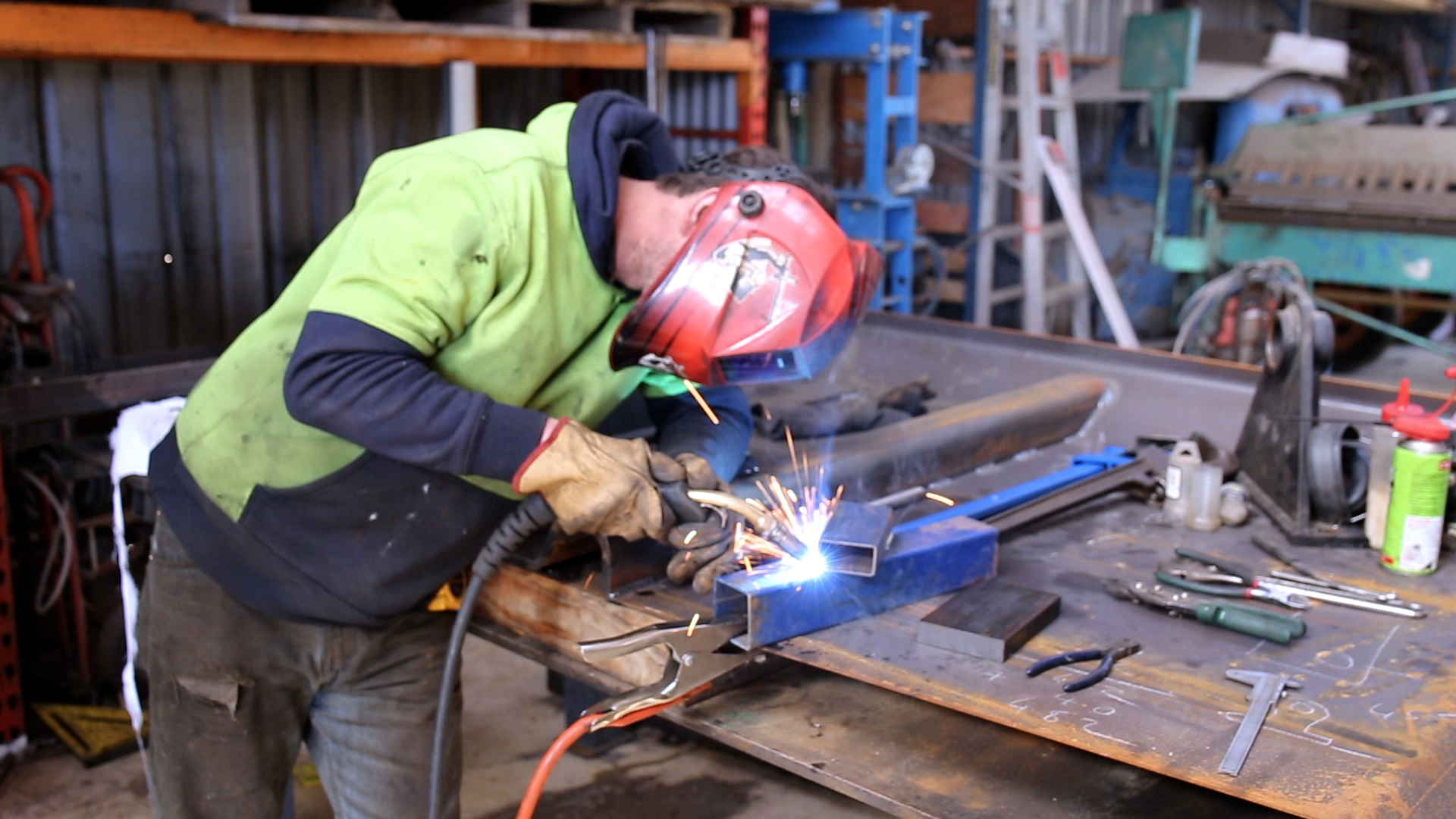
In today's fast-paced engineering world, Central Engineering stands out for its commitment to providing a wide range of general engineering services to the Nelson community. Their services include designing, constructing, and maintaining machines, devices, systems, and parts. Their approach not only enhances project efficiency but also boosts productivity, reduces costs, and delivers high-quality, custom products and services on time.
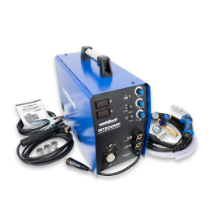
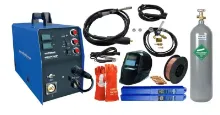
The machine behind it all? The Weldtech 200MP is a welding machine known for its sturdy build and performance, making it a favourite in the workshop. This blog post will explore how the Weldtech 200MP helps Central Engineering achieve top-quality project outcomes and customer satisfaction.
Exploring the Key Features of the Weldtech 200MP: A Staple in Modern Workshops
The Weldtech 200MP stands out as a model of industrial strength and durability. Stuart Langford mentioned, "The Weldtech 200MP has been pretty bulletproof for us... it's now the most used welder in our workshop." When measured against previous models and other brands, the Weldtech is notable for its long-lasting performance and ability to efficiently manage a wide range of tasks. Whether it's simple jobs or complex specialised projects, this welder consistently delivers.
What sets it apart is its user-friendly interface combined with advanced technical capabilities. Its straightforward setup allows welders of all levels to produce high-quality work. "It's quite easy to use," notes Langford, "anyone can use it. It is smooth but easy to set up." This ease of use and ability to effortlessly switch between different welding modes – including TIG, MIG, and ARC – highlights its suitability for diverse applications.
Among its main features, the WT200MP is an all-in-one solution boasting 200A of power to weld steel up to 12mm thick. Despite its power, it's incredibly lightweight at just 13kg, making it easy to move and use anywhere. It comes with inductance adjustment for excellent weld control, and an optional spool gun is available for those working with aluminium and silicon bronze. This makes it a reliable machine for everything from light engineering and automotive work to home projects, farming, and maintenance.
What the WT200MP multi-process actually is
At its core, this is a 200-amp, single-phase inverter that plugs into a standard 230V 15A outlet. Some multi-process units support both 120V and 240V inputs for added flexibility, but this welding machine is set up for a standard 230V single-phase outlet. It uses IGBT inverter technology, which is the same arc-control approach found in machines costing a good deal more, and it weighs only 13kg. That combination of output and portability is the headline. You get enough power to weld steel up to roughly 12mm thick, in a case light enough to carry up a ladder or drop in the back of a ute for a callout.
The three processes break down like this: mig, tig, and arc each cover a different kind of job. In MIG mode, it uses a consumable wire spool with shielding gas to protect the weld, and it also handles gasless flux-cored wire, which is similar but uses a hollow wire filled with flux, with stepless voltage and wire-feed control plus an inductance adjustment for fine-tuning the arc. In stick mode, one of the core arc processes, it uses a flux-coated consumable rod to create a protective gas shield and runs general-purpose and low-hydrogen electrodes from 1.6mm up to 4.0mm. In TIG mode, it offers lift-arc DC TIG with a non-consumable tungsten electrode for precise welding, suitable for steel and stainless steel. That gives you Tig and Arc processes alongside MIG in one compact unit. It ships with a 3m Binzel Euro-connect MIG torch, and a separate lift TIG torch is available when needed.
MIG wire performance: where the machine feels most at home
It became clear quickly that MIG is the process this welder was designed around, and that is no criticism. Setting up was genuinely fast. The stepless dials let you dial in voltage and wire speed without hunting through preset steps, and the live digital displays give you a real reading of your output rather than a vague guess. On 1.6mm sheet the arc started cleanly and stayed stable, with the inductance control letting us soften the arc and cut spatter on thinner gauge, and in MIG mode it produced professional results in our field test.
Stepping up to heavier structural sections for fabrication projects, the 200A output had plenty in reserve. The duty cycle is the figure to watch on any inverter, and here the WT200MP holds a 60% duty cycle at 160A in MIG mode. In practice, that means roughly six minutes of welding in any ten before the thermal cut-in needs a rest, which comfortably covered the stop-start rhythm of real fabrication work. Gasless performance was a pleasant surprise, laying down tidy beads on site where dragging a gas bottle around is impractical, though unlike synergic units, whose controls automatically adjust settings based on material thickness, it expects you to make those adjustments yourself.
Stick (MMA) performance and the one quirk to know
Switch to stick, and the machine is equally capable on the metal itself. Arc strikes were positive, the arc force kept the rod from sticking on lower settings, and on 3.2mm general-purpose electrodes, it ran smoothly through fillet and butt joints. The 130A at 60% duty cycle in stick mode is realistic for maintenance and repair work. As with many multi-process machines, moving from MIG to stick or TIG can mean reconfiguring cables and the torch or lead setup, and stick is one of the unit’s available arc processes.
There is one honest limitation worth flagging, because it is the single most common point raised by long-term owners. In stick and TIG modes, the digital display shows the open-circuit voltage rather than your set amperage until you actually strike an arc. If you weld solo and like to dial in an exact current before touching the work, that is mildly frustrating, because you cannot confirm your setting without striking up.
The practical solution is simple. Treat the current knob as a relative scale and run a quick test bead on scrap to confirm your setting before you start on the real job, as many tradespeople do anyway. Once you know roughly where your common electrode sizes sit on the dial, the workflow becomes second nature. It is a consequence of Weldtech deliberately keeping the controls simple, which also keeps the price down. You are trading a digital amp readout in stick mode for a machine that costs a fraction of a fully featured synergic unit.
TIG, spool gun and aluminium: knowing the boundaries
Lift TIG on DC works well for steel and stainless, and lift-start is a clean, electrode-friendly way to begin an arc. The important thing to understand before buying is that this is a DC-only machine. That means it will not AC TIG weld aluminium or magnesium alloys, which need alternating current to break down the oxide layer.
That does not lock you out of aluminium entirely, though. The optional Weldtech spool gun lets you MIG weld aluminium and silicon bronze, feeding soft wire smoothly without the bird-nesting you get pushing it through a long torch liner for added flexibility on occasional aluminium jobs. If aluminium is occasional rather than core to your business, the spool gun route is a sensible, affordable way to cover it, and can be perfect for occasional aluminium work.
5 Specifications and IGBT inverter technology at a glance
| Specification | Detail |
| Processes | MIG (gas and gasless), Stick (MMA), Lift TIG (DC) |
| Welding output | 200A, welds steel up to approximately 12mm |
| Power input | 230V single phase, 15A (7kVA generator capable) |
| Weight | 13kg, with an 18-month commercial warranty |
A welder that lives in a busy shop has to take some knocks, and the WT200MP feels solid for its class. The compact case and 13kg weight make it genuinely portable, which matters when half your work is repairs that cannot come to the bench. With a 7kVA generator capacity rating, it also runs off a suitably sized generator, so remote and rural jobs, on-site projects, and site projects where portability matters are on the table, delivering professional results in workshops and on-site jobs. For farmers, maintenance teams, and mobile fabricators, portability suits both workshop and on-site use.
Who the Weldtech WT200MP is for
After a week of mixed work, the picture is clear. This is a strong fit for light engineering, automotive work, farm and rural repairs, maintenance teams, and hobby fabricators who want one capable machine rather than a shelf of single-purpose units. The MIG side is the heart of it and performs above its price, while stick and TIG add real versatility for the jobs that crop up occasionally.
It is less suited to anyone whose daily work involves heavy aluminium fabrication requiring AC TIG, or to operators who want fully synergistic, preset-driven controls with a constant digital amp readout in every mode. Buyers seeking more advanced, professional-level multi-process welders may consider ranges such as the RAZORWELD series. If that describes you, you are looking at a different price bracket entirely.
The Weldtech WT200MP does exactly what a good multi-process welder should: it eliminates the need to buy and store three separate machines without cutting corners on weld quality, delivering professional results for workshop or on-site work. The controls are simple, and that simplicity is the trade-off that keeps it affordable. Learn the current dial with a test bead, accept the DC-only TIG boundary, and you have a versatile, portable workhorse that has earned its place on the bench at Central Engineering and in plenty of workshops like it.
You can view full specifications, pricing, and the optional spool gun on the product page for the Weldtech Inverter Multi-Process Welder WT200MP.
Real-World Applications: Putting the WT200MP to the Test
The actual test of any industrial machine lies in its performance under the pressures of real-world demands. In the case of the Weldtech 200MP, its application in projects, especially those involving up to 25mm steel, showcases its incredible capabilities. "You can weld up to 25mm steel quite easily with it," Langford recounts, illustrating its ability to punch above its weight without needing constant machine switches.
The machine's integration into daily workshop operations has been seamless. From running on generators for off-grid projects to utilising the workshop's existing power systems, the Weldtech 200MP adapts without skipping a beat. Its features, such as adjustable inductance and wire speed, provide excellent control, enabling welders to tailor their approach to each unique project.
As the engineering and metalwork landscapes evolve, machines like the Weldtech 200MP are leading the charge in innovation and productivity. Its introduction into the market has not just raised the bar for what professionals can expect from their equipment; it has redefined quality and efficiency parameters.
In conclusion, the Weldtech 200MP is not merely a machine; it is a pivotal element in the ongoing advancement of the welding industry. Its reliability and broad range of functionalities make it an indispensable asset for any workshop. In the words of a dedicated user, "It fits into our workflow seamlessly." This sentiment resonates across the industry as the Weldtech 200MP continues to shape the future of welding, one reliable weld at a time. Ready to elevate your welding projects to the next level? Contact us today to learn more about how the Weldtech 200MP can transform your workshop's capabilities.