0800 699 353
 Parts Finder


Table of Contents
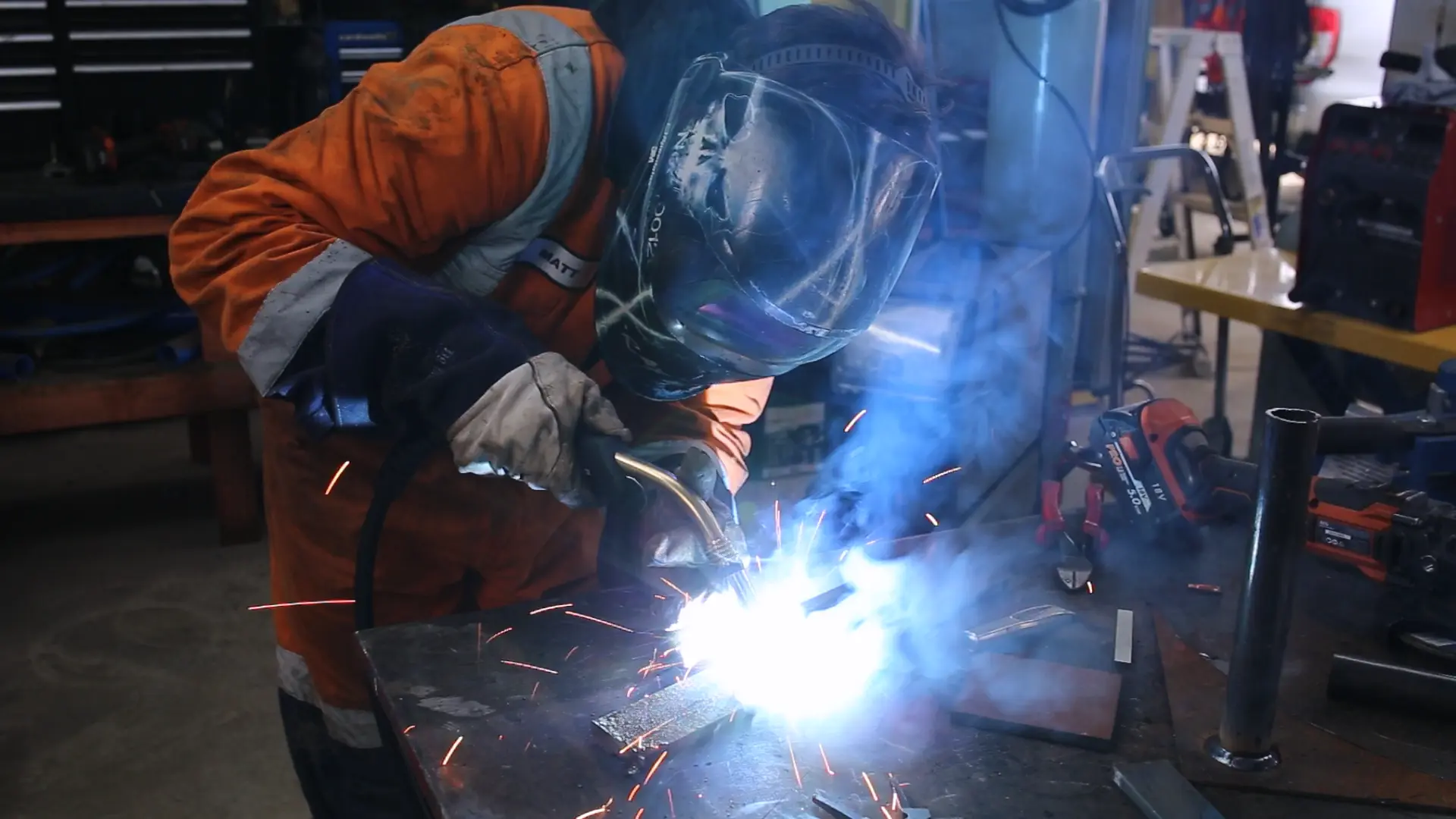
Most engineering workshops do not have the opportunity to specialise. One morning, the job is a cracked digger bucket; the afternoon brings a thin-gauge sheet; and by the end of the week, someone needs a generator repaired out in a paddock with no mains power in sight. The machine that copes with all of it, cleanly and without constant fiddling, is the one that earns its place on the floor.
The trouble is that many teams end up owning two or three single-purpose machines, or they accept patchy weld quality the moment they step away from workshop power. A welder that only does one thing well, or that loses its nerve on a long extension lead, quietly drags down a whole day of output. Both problems cost money and time.
What workshops actually want is a single welder that switches between processes, maintains a stable arc across varied materials, and keeps performing even when the power supply is less than ideal. That is the gap the Strata AdvanceMig255C is built to fill, and it is exactly why it became a cornerstone tool for Sitewise Engineering.
A true multi-process welder that adapts to the work
The Strata AdvanceMig255C is a multi-process welder, meaning MIG, MMA stick, and lift TIG all run from a single unit. For a workshop juggling repair work, fabrication and on-site jobs, that flexibility removes the need to buy, store and maintain separate machines.
Synergic MIG operation does the heavy thinking for the operator. You set the basics, and the machine matches the voltage and wire speed for you, with a save-and-recall function, so your favourite settings are a button away. A four-roll geared metal wire feeder keeps the wire moving smoothly, which is where many cheaper machines fall down. For finer work, lift TIG uses a non-consumable tungsten electrode to create the arc and weld puddle, with downslope and remote current control for high-precision welds on thin materials and the delicate joints they demand.
Matt Inwood, an engineer at Sitewise Engineering, put the range plainly: "whether it's light, heavy, solid, flux core, but they're just an all-round perfect machine." The seamless move between flux core and solid wire is a daily convenience for teams who need to choose the process that suits the next job.
Why the AdvanceMig255C ranks among the best CO2 welding machines
When people search for the best CO2 welding machine, they are usually after a MIG setup that lays down clean, strong welds with CO2 or mixed shielding gas as an affordable way to get serious performance without burning a hole in the budget. The AdvanceMig255C fits that brief well.
As an inverter welder running modern IGBT and PFC technology, it delivers a smooth, controllable arc across a wide current range, from light 25A passes up to 250A for heavier structural work. The digital microprocessor control and adjustable MIG waveform let you fine-tune inductance, keeping the arc soft and spatter low. The full-colour LCD display clearly shows every setting, which shortens setup and reduces guesswork. It runs solidly and happily with flux-core wire, and gasless MIG welding is useful for portable site work, so the same machine handles tidy shop work and dirtier site repairs.
Duty cycle is worth understanding here, because it is where honesty separates a good machine from a marketing claim. The AdvanceMig255C holds 150A at a full 100 per cent duty cycle and 195A at 60 per cent, which means it will weld all day at the currents most fabrication work actually uses, only easing off near its 250A ceiling. For shielding, straight CO2 offers deep penetration and lower running costs, while an argon mix runs cleaner with less spatter, and this machine handles both without complaint. Shielding gas helps protect the weld from contamination, while gasless MIG welding is often the better choice in windy outdoor conditions.
Inwood's verdict on capability was short and to the point: "It's got the grunt." For workshops weighing value against performance, achieving genuine industrial output at this price is what tips the decision in favour of efficiency and reliability.
Performance welding solutions built for the New Zealand workplace
Performance welding solutions have to support the wider business, not just look good on a spec sheet. The AdvanceMig255C is built around high-quality, over-specified, engineered electronics and has been stress tested up to 440V, with IP23-rated protection against dust and moisture. That matters in busy New Zealand workshops and on rural sites where gear takes a beating.
Multi-voltage input is another quiet strength. The unit operates over a wide input range, from 90V to 275V, so long extension leads and a variable supply do not affect its performance. An intelligent protection system watches temperature, voltage and current to guard against overload, and the welder is designed to run on generator power with surge protection built in, improving mobility for New Zealand site work. That last point becomes important the moment you leave the grid behind, and reflects the brand’s focus on stable performance away from fixed workshop power.
Specifications at a glance
The figures below are taken from the current Proline Industrial listing for the AdvanceMig255C package.
| Specification | Detail |
| Welder type | Multi-process MIG / MMA / Lift TIG inverter |
| Core technology | IGBT and PFC |
| MIG output current | 25A to 250A |
| MIG output voltage | 10V to 30V |
| MIG duty cycle | 250A at 16%, 195A at 60%, 150A at 100% |
| MMA output current | 10A to 250A |
| Input power supply | 230V AC single phase, 15A, 50/60Hz |
| Generator capacity | 10kVA |
| Display | Smart full colour LCD |
Pairing with the GT Power GT10000ESQ for power anywhere
A capable welder is only as good as the power feeding it. In remote jobs, Sitewise Engineering runs the AdvanceMig255C from the GT Power GT10000ESQ generator, which makes proper off-site welding practical.
The GT10000ESQ delivers up to 9000W with an 11.3kVA peak, comfortably within the 10kVA generator capacity the welder requires in typical use. A large 25L fuel tank keeps it running through long shifts. The patented Tomahawk alternator produces clean, stable output, while the automatic voltage regulator smooths the supply that sensitive welding electronics rely on. An industrial air cleaner and muffler system keeps noise down, a digital display tracks voltage, current, and run hours, and 15A and 32A outlets with an adapter cord meet the welder's needs.
The result, in Inwood's words, is that "the weld is definitely quality," as good as running off workshop mains. Together, the two pieces form a portable option for off-site welding that behaves like a permanent setup.
Proven on-site at Sitewise Engineering
Specifications tell one story, daily use tells another. At Sitewise Engineering, the AdvanceMig255C handles everything from bush equipment repairs, such as lawnmowers and diggers, through to precise generator welding on site. Its adaptability is what keeps it in constant use across such a wide spread of tasks, helping keep work moving across the business, and that consistency is what builds trust in a tool.
Ease of setup is mentioned too. As Inwood noted, it is "a real basic machine to set up," and the basic setup information is easy for newer hands to follow, which keeps them productive without a long learning curve. For a working team, a welder that anyone can pick up and run reliably is worth as much as raw output.
What you get in the package
The Strata AdvanceMig255C Synergic MIG/MMA/TIG Welder and Trolley Package is sold ready to weld. Alongside the welder, you get a compact MIG welding trolley, a 3 metre earth lead with heavy-duty clamp, a 4 metre arc lead with electrode holder, a 4 metre MB25 MIG torch, a two-stage flowmeter, an argon gas regulator, gas hose, quick connectors and a full set of drive rollers for solid and knurled wire.
You can check the current price, stock, full package information and contents on the product page here: Strata AdvanceMig255C Synergic MIG/MMA/TIG Welder and Trolley Package, where you can add the unit to cart or send an enquiry. Buyers can also add accessories if needed. It ships free, comes with a 48-month domestic warranty, and arrives set up for work.
Getting the most from the AdvanceMig255C
A good machine still rewards a bit of care. Spend the first session saving your common settings to the synergic memory, so a return to mild steel sheet or heavier structural wire is a single recall rather than a fresh setup each time. Match the drive rollers to your wire diameter using the V-groove and knurled rollers supplied, as the wrong roller is the most common cause of feed problems and erratic arcs. If you are welding outdoors in the wind, gasless MIG welding can be the better choice because it does not rely on shielding gas, and once the setup is right, pulling the torch trigger starts the wire feed cleanly. For aluminium work, process choice matters, and Friction Stir Welding is often used on aluminium alloys where low-distortion joints are critical.
When you take the welder to the site, keep extension leads as short as the job allows. The 90V to 275V input tolerance means the machine will keep running for a long time, but shorter leads still give you a stronger, steadier arc. If you are running from the GT10000ESQ, let the generator settle to full speed before you start a weld, and keep the fuel topped up so the supply stays clean under load. None of this is complicated, and it is the kind of routine that keeps weld quality consistent from the first job of the day to the last.
The bottom line
If your workshop needs one machine that covers both heavy and light welds, switches cleanly between processes, and maintains quality on remote sites, the AdvanceMig255C earns serious consideration. As a rugged multi-process inverter welder, it answers the everyday problem of varied work, and paired with the GT Power GT10000ESQ, it becomes a genuine performance welding solution wherever the job takes you. To talk through whether this setup suits your operation, contact the team at Proline Industrial for expert advice on the right welding solution for your operation, including at-source fume extraction and safer setup, as well as broader industrial needs such as robotic welding for greater production precision and speed, orbital welding for consistent high-quality pipe work, and Cold Metal Transfer for low-heat, virtually spatter-free joints. They can also advise on ultrasonic welding for bonding metals at the molecular level without filler metals and Industrial RF Welding for durable thermoplastic applications.