0800 699 353
 Parts Finder


Table of Contents
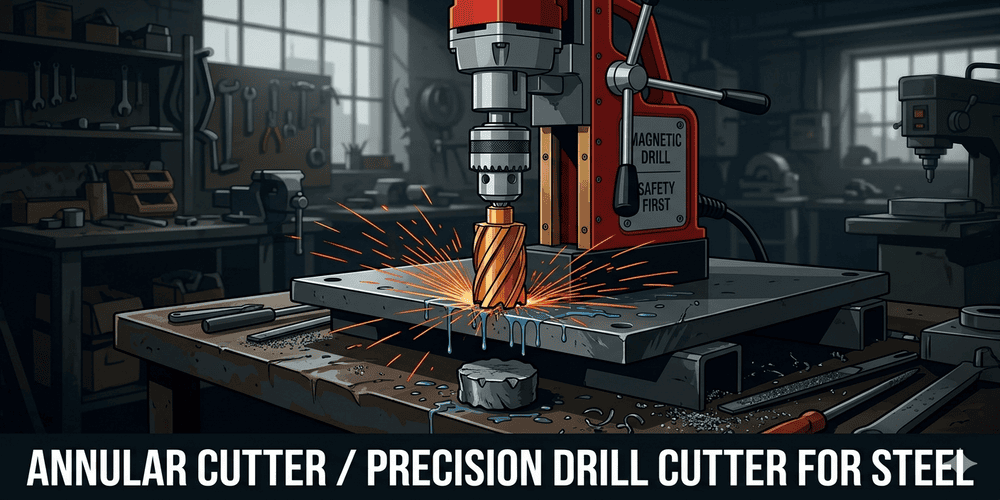
If you work with steel on a regular basis in a fabrication shop, on a construction site, or in a rural engineering workshop, the annular cutter is one of the most important tools you can add to your setup. Also widely known as a drill cutter, broach cutter, or core drill cutter, the annular cutter has largely replaced the twist drill bit for large-diameter hole cutting in metal across professional trades in New Zealand and around the world. Yet there are still plenty of tradespeople who have never used one, or who underestimate what a properly specified drill cutter can do for their productivity and hole quality.
This guide covers everything you need to know: what an annular cutter is, how it works, the difference between HSS and TCT types, how to match a cutter to a machine, correct operating technique, and which applications are best served by a drill cutter rather than a conventional bit. By the end, you will have a clear picture of why this tool is considered the gold standard for metal hole cutting in professional environments.
What Is an Annular Cutter?
An annular cutter is a hollow, cylindrical cutting tool with teeth around its circumference, designed to cut only the outer ring of a hole in metal rather than removing the entire cross-section of material. The word "annular" comes from the Latin annulus, meaning ring, which describes exactly what the tool cuts. As the cutter advances through the material, it leaves a solid plug of metal in the centre, known as the slug, which is then cleanly ejected through the hollow body of the cutter once the cut is complete.
This ring-cutting principle is what separates an annular cutter from a conventional twist drill bit, and it is the root cause of nearly every performance advantage the drill cutter offers. Because only a narrow ring of material is being displaced rather than the full diameter, the cutting forces are dramatically reduced. Less energy is consumed per cut, less heat is generated at the cutting edge, and the machine doing the driving, typically a magnetic drill, experiences far less strain. The result is a faster cut, a longer-lasting tool, and a cleaner, more accurate hole.
A pilot pin sits in the centre of the annular cutter and contacts the workpiece first, centring the tool precisely on the marked position before the cutting teeth engage the metal. This means no centre punching, no pilot hole, and no step drilling. The cutter goes straight in and produces a finished hole to the correct diameter in a single pass.
Annular cutters are available in diameters ranging from 12mm up to 100mm or beyond, and in two standard depth-of-cut series. Short series cutters offer a 25mm depth of cut, which covers the vast majority of structural steel applications. Long series cutters extend to 50mm, making them the right choice for thicker sections, box sections, or where the drill must penetrate multiple layers of material in a single pass.
Annular Cutter vs Twist Drill: Understanding the Difference
Most metalworkers start their careers using twist drill bits, and for small-diameter holes in light materials, a twist drill is adequate. The problems begin when the hole diameters increase, and the material gets thicker.
A twist drill bit removes every scrap of material across the full face of the hole. At 10mm or 12mm in steel, this is manageable. At 25mm, 35mm, or 50mm, the torque requirements climb sharply, heat builds rapidly, the drill tends to wander off centre, and the hole quality typically becomes rough, oversized, and with a pronounced burr, making it difficult to control. Step drilling through progressively larger bits helps, but adds time and compounds the accuracy issues at each stage.
An annular cutter, by contrast, does none of this. Because the centre material is left intact and only the perimeter is cut, a 35mm drill cutter running in a magnetic drill requires a fraction of the torque of a 35mm twist drill in a standard drill press. The cut is completed faster, the hole wall is smooth and square, there is no burr to dress, and the finished diameter is accurate to within tight tolerances without any secondary work. In high-volume fabrication environments, these advantages compound, yielding significant productivity and cost savings over hundreds of holes per day.
The trade-off is that annular cutters require a dedicated machine, the magnetic drill, rather than a standard corded drill or drill press. But for any professional working regularly with steel with a diameter of 12mm or above, this is not a trade-off at all; it is simply the correct tool for the job.
HSS vs TCT: Choosing the Right Annular Cutter Material
When selecting an annular cutter or drill cutter in New Zealand, the most important decision is the material from which the cutting teeth are made. There are two main options, each suited to different working conditions.
High-Speed Steel (HSS) annular cutters are manufactured from M2 or M2AL grade tool steel, which is tough, sharpenable, and best suited to commonly used mild steel and other softer materials; it also places less stress on magnetic drills, making HSS a strong option for lightweight machines. HSS cutters are sharp from new, respond well to regrinding when they dull, and represent excellent value for most general fabrication and construction applications. Rotabroach’s Raptor M2AL Short Series HSS Annular Cutters are the go-to choice for everyday work, available in diameters from 12mm to 60mm with a 25mm depth of cut. Where thicker sections need to be drilled, the Raptor M2AL Long Series HSS Annular Cutters provide a 50mm depth of cut across the same diameter range. For tradespeople new to annular cutters, the Rotabroach 14-22mm Short Annular Cutter Kit (7-Piece) covers the most commonly used sizes in a single cost-effective set.
Tungsten Carbide Tipped (TCT) annular cutters take HSS performance a step further by brazing tungsten carbide inserts onto the cutter body's cutting edges. Tungsten carbide is significantly harder than high-speed steel, and its cutting edge provides exceptional durability and wear resistance for hard, abrasive materials such as stainless steel and cast iron, making TCT drill cutters the right choice for continuous production environments, for cutting harder or heat-treated steels, or anywhere the cutter will be run for extended periods without a cooling-off time. The higher initial cost of a TCT cutter is offset by a substantially longer service life and reduced downtime for tool changes in busy shops. Rotabroach’s TCT Short Series Annular Cutters and TCT Long Series Annular Cutters are available from 12mm to 52mm diameter, and are a popular choice across NZ fabrication and structural engineering firms running high-output production.
A simple rule of thumb: if you are drilling intermittently across a variety of jobs, HSS is the practical and economical choice. If you are running the same cutter size continuously through a production run, TCT pays for itself quickly.
The Magnetic Drill: The Machine Behind the Annular Cutter
An annular cutter cannot be used in a standard handheld drill or conventional drill press. It requires a magnetic drill, also known as a mag drill, which provides the two things a drill cutter needs to perform correctly: a stable, fixed base and a precisely controlled feed rate.
The magnetic base of a mag drill uses a powerful electromagnet to clamp directly to the steel workpiece, eliminating movement during the cut and allowing the operator to drill in any orientation, including vertically overhead or horizontally into a vertical beam face. The feed arbour then advances the annular cutter into the material at a consistent rate, maintaining the optimal chip load on the cutting teeth throughout the cut.
Proline Industrial stocks the complete Rotabroach Element magnetic drill range, which works seamlessly with Rotabroach annular cutters. The Rotabroach Element 30 Magnetic Drill is the compact, site-portable option with a 32mm cutting capacity, ideal for maintenance work and on-site fabrication where access is restricted. The Rotabroach Element 40 Magnetic Drill steps up to a 40mm capacity and suits the majority of general fabrication shop requirements. The Rotabroach Element 50 Magnetic Drill delivers heavy-duty performance at 50mm capacity for demanding structural applications, while the Rotabroach Element 75 Magnetic Drill handles the largest-diameter work in high-output production settings.
Every annular cutter setup also requires a correctly sized pilot pin, matched to the cutter series HSS 25mm, HSS 50mm, TCT 35mm, or TCT 50mm. Always verify that the pilot pin is correctly seated before beginning a cut, as it keeps the cutter centred during the initial engagement with the material.
How to Use an Annular Cutter Correctly
Correct technique is what separates a drill cutter that lasts hundreds of holes from one that fails prematurely. The most critical habit is the consistent application of cutting lubricant. An annular cutter generates significant heat at the cutting teeth, and without lubrication, that heat accelerates wear rapidly. A cutting paste or fluid should be applied to the entry point before cutting begins, and reapplied whenever cutting slows or the cut's pitch changes. This single habit has more impact on a cutter's life than any other factor.
Speed matters too. Annular cutters operate at considerably lower RPM than twist drills, generally between 180 and 450 RPM, depending on the cutter diameter and material. Larger cutters run slower; harder materials require lower surface speeds. Running a drill cutter too fast burns the cutting edge in seconds. Too slow, and you are simply wasting time without any quality benefit. The Rotabroach speed and feed charts provide precise guidance for each diameter and material type, and it is worth taking 5 minutes to consult them before starting on unfamiliar stock.
Feed pressure should be firm and consistent. Annular cutters do not like hesitation or chattering; let the machine advance steadily under its own feed mechanism and resist the urge to force it. When the cutter breaks through the underside of the material, ease off the feed slightly to avoid tearing the exit face. Once the cut is complete, the pilot pin spring-ejects the slug cleanly through the body of the cutter.
Inspect your annular cutters before each use. A chipped or blunt tooth does not just produce a poor hole; it places excessive load on the magnetic drill arbour, can cause the mag drill to lose its hold on the workpiece, and significantly increases the risk of a dangerous kickback event. Keeping a spare cutter of each common size on hand is standard practice in any professional shop. Browse the full range of annular cutters at Proline Industrial to keep your kit stocked.
Where Annular Cutters and Drill Cutters Are Used in New Zealand
The annular cutter earns its place across virtually every sector of New Zealand's metal-working industry. In structural steel fabrication, it is the primary tool for producing bolt holes, connection plate penetrations, and anchor point holes in I-beams, RHS sections, and channels. In commercial construction, it handles the penetrations for HVAC, electrical conduit, and pipe work that must pass through structural steel members cleanly and without distortion. Rural engineering workshops across the South Island and Waikato rely on drill cutters daily for fabricating farm equipment, trailer chassis, and machinery mounts where accuracy in mild steel is essential, but production speed is equally important.
In the automotive sector, annular cutters are used for chassis modification, roll cage fabrication, and custom exhaust work, where a clean hole in thin and medium steel is needed without warping the surrounding material due to heat. The marine and shipbuilding industries active in ports including Tauranga, Auckland, and Nelson use drill cutters for hull frame penetrations, deck fittings, and structural connection points, where both precision and corrosion-resistant finishes make hole quality critical from the outset.
Ready to Upgrade Your Metalworking Setup?
Switching from twist drills to annular cutters is one of the highest-impact changes a metalworking tradesperson or shop can make. The gains in speed, hole quality, and tool longevity are immediate and measurable from the very first cut.
Proline Industrial supplies the complete Rotabroach annular cutter and magnetic drill range to tradespeople and businesses across New Zealand.